
Zion Eye Institute — Corneal Surgery
Corneal Surgery in St. George, UT
From corneal cross-linking to full and partial-thickness transplants, our fellowship-trained corneal specialist offers the most advanced treatment available in Southern Utah.
- Southern Utah's only fellowship-trained corneal specialist
- Exclusive access to corneal cross-linking and DSAEK
- Full range of medical and surgical cornea treatments
Is this right for you?
Am I A Candidate for Corneal Surgery?
Corneal problems can start with blurry vision, discomfort, or trouble with contact lenses. If any of these sound like you, a corneal evaluation can find the cause.
Eye pain, redness, or a sudden change in vision can signal a corneal infection or injury and should be checked right away. Call us at (435) 656-2020.
The Procedure
Corneal Surgery Options
Corneal treatment exists on a spectrum, and where you fall on that spectrum depends entirely on how far the underlying disease has progressed.
In early keratoconus, the cornea’s collagen fibers have started to weaken, allowing the cornea to bulge forward into an irregular cone shape, but corneal cross-linking can intervene before that process goes much further. During cross-linking, a riboflavin (vitamin B2) eye drop is applied to the cornea and then activated with a controlled dose of ultraviolet light, a combination that creates new molecular bonds between collagen fibers and measurably strengthens the tissue, all in a single roughly 30-minute in-office session.
When disease has already progressed to significant scarring, thinning, or vision loss, a transplant becomes necessary instead. A full-thickness transplant, or penetrating keratoplasty, replaces the entire diseased cornea with a precisely sized disc of healthy donor tissue, sutured into place. For certain conditions affecting only the cornea’s innermost cell layer, such as Fuchs’ dystrophy, a partial-thickness DSAEK transplant replaces just that inner layer through a much smaller incision, which is why it typically heals faster than a full transplant. Choosing between these options comes down to exactly which layer of the cornea is diseased and how advanced that disease has become.
Medical Cornea Care
Common conditions that affect the cornea include dry eyes, infections and ulcers, allergies, traumatic injuries, and corneal dystrophies. Treatment ranges from eye drops to laser therapy to full corneal transplants. Changes to the cornea can cause serious damage if they aren’t treated promptly, so see a cornea specialist early.
Corneal Cross-Linking
A riboflavin eye drop combined with UV light strengthens the cornea's collagen fibers over about 30 minutes
Penetrating Keratoplasty (PKP)
The central full thickness of the diseased cornea is replaced with healthy donor tissue
DSAEK
Only the cornea's inner layer is replaced through a small incision, offering a faster recovery for select conditions
Ongoing Monitoring
Regular follow-up tracks healing and the long-term clarity of the cornea
Patient Reviews
Both treatments address corneal disease, but at very different stages and with very different approaches.
Corneal Cross-Linking vs. Corneal Transplant
Early intervention vs. advanced disease
Corneal Cross-Linking
A non-surgical treatment for early keratoconus
- Uses a riboflavin eye drop and UV light over about 30 minutes
- Strengthens the cornea's collagen fibers to stop progressive steepening
- May help patients return to using contact lenses and reduce the need for a future transplant
Preventive, In-Office Treatment
Corneal Transplant (PKP or DSAEK)
Replaces diseased corneal tissue with healthy donor tissue
- Used for advanced keratoconus or significant scarring and loss of transparency
- DSAEK replaces only the inner layer of the cornea for select conditions like Fuchs’ dystrophy
- Recovery can take several months depending on the type of transplant
For Advanced Disease
Corneal treatment ranges from non-surgical options for early disease to transplant surgery for advanced cases.
Diagnosing and Treating Corneal Disease
1
Comprehensive Corneal Evaluation
- Your doctor examines the shape, thickness, and clarity of the cornea to diagnose the specific condition
2
Treatment Selection
- Early keratoconus may be treated with corneal cross-linking to halt progression
- Advanced disease or scarring may require a full or partial-thickness transplant
3
Procedure
- Cross-linking is performed in the office in about 30 minutes
- Transplants are performed in an operating room
4
Recovery
- Recovery ranges from days for cross-linking to several months for a transplant
- Follow-up visits track healing and the long-term clarity of the cornea
What to Expect
Expected Corneal Surgery Outcomes & Recovery
Outcomes depend heavily on how early corneal disease is caught and treated.
What Patients Can Expect in the First 30 Days
- Full-thickness transplant recovery can take six months to a year
- DSAEK recovery typically takes three to four months
- Most patients notice visual improvement within the first few weeks after DSAEK
- A contact lens may still be needed after a transplant for the clearest vision
Informed Care
Safety & Risk Considerations
Safety Profile
- Corneal transplants have been performed successfully for more than 50 years
- Treatment approach is matched to the specific corneal condition and its severity
Possible Side Effects
- Temporary discomfort or light sensitivity is common after corneal cross-linking
- Sutures from a full-thickness transplant can remain in place for up to a year and may cause irritation
- Recovery time varies significantly by procedure, from days to many months
How We Minimize Risk
Seek Early Evaluation
Catching corneal disease early, especially keratoconus, allows for less invasive treatment options
Follow Post-Operative Care Instructions
Careful use of prescribed drops and protecting the eye supports proper healing
Attend All Follow-Up Visits
Regular monitoring helps track healing and catch any concerns early, especially after a transplant
Why Zion Eye Institute
Why Choose Zion Eye Institute
Comprehensive, expert eye care for patients across Southern Utah and the surrounding region
Fellowship-Trained Specialists
Our team includes Southern Utah's only fellowship-trained specialists in several subspecialties
Four Convenient Locations
Offices in St. George, Cedar City, Santa Clara and Mesquite
Advanced Technology
We invest in the latest diagnostic and surgical technology available in the region
Our Team
Meet Our Doctors
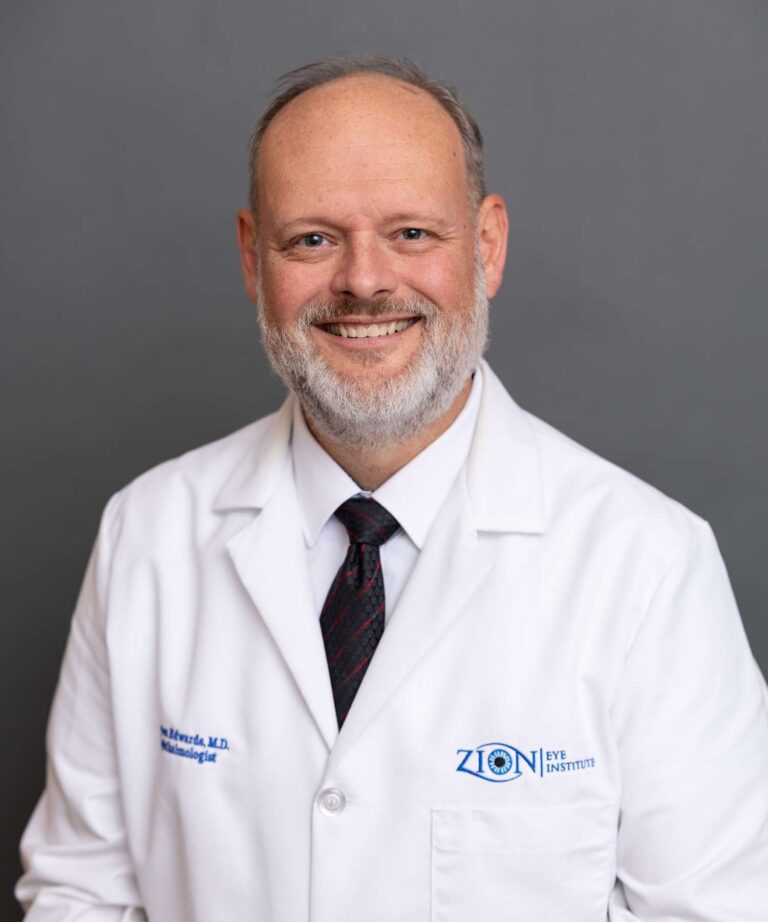
Corneal care is led by Dr. Jayson Edwards, a fellowship-trained corneal specialist offering Southern Utah’s only access to corneal cross-linking and DSAEK.
Find Us
Corneal Surgery Treatment in St. George, Santa Clara, Mesquite & Cedar City
Visit us at any of our four Southern Utah and Nevada offices.
Coverage & Financing
Cost & Insurance
We work with your insurance and offer financing to make corneal care accessible.
Insurance
Many of our services are covered by medical insurance.
- Bring your medical insurance card and photo ID to your visit
- Our staff can help verify your coverage before your appointment
- Vision correction procedures such as LASIK are generally not covered by insurance
Financing Options
We offer flexible payment options for procedures not commonly covered by insurance.
- CareCredit, North America's leading patient payment program, lets you begin treatment now and pay over time with low monthly payments
- We can tailor a personalized payment schedule to help make your procedure affordable
- Pay your bill online through our secure ModMed patient portal
Flexible financing available. We work with CareCredit to offer low- and no-interest payment plans for care not covered by insurance. Ask about your options at your consultation.
locationsCommon Questions
Frequently Asked Questions
What is keratoconus?
Keratoconus is a progressive condition in which the cornea thins and bulges into a cone shape, causing distorted vision. Corneal cross-linking performed early can help prevent it from advancing to a more severe stage.
How long does recovery take after a corneal transplant?
Recovery from a full-thickness corneal transplant (PKP) is slow and may take six months to a year, with sutures sometimes remaining in place for up to a year. DSAEK, which replaces only the inner corneal layer, typically allows for a faster recovery of three to four months.
Will I still need contact lenses after a corneal transplant?
Some patients still need a contact lens after a corneal transplant to achieve the clearest possible vision, even once the eye has healed.
What should I bring to my appointment?
Please bring a photo ID and your medical insurance card. If you wear contact lenses, bring your glasses as well.
Do you offer financing?
Yes. We offer the CareCredit card for procedures not commonly covered by insurance, such as LASIK and premium lens implants, along with personalized payment schedules.
Ready When You Are
Schedule Your Free Consultation
Consultations are available at all four locations; online scheduling takes less than two minutes.
Request Appointment